Services
Formwork
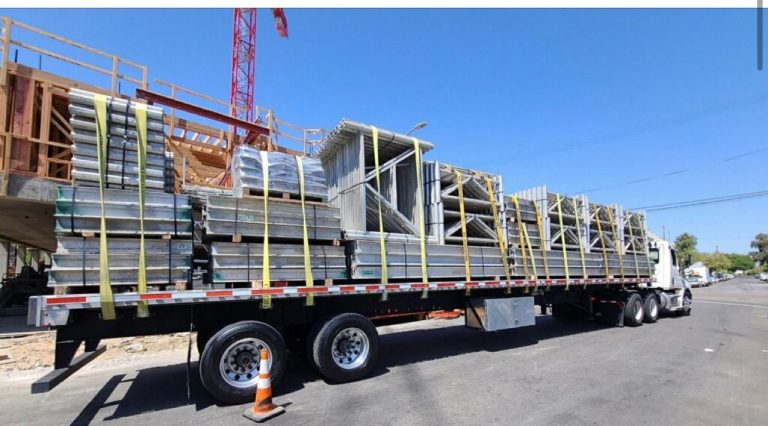
Constructure’s structural concrete operations are founded on the controlled execution of precision-engineered formwork systems governing the construction of foundations, elevated decks, columns, structural walls, beams, and reinforced concrete cores. Each structural element is installed in strict accordance with engineered design documents, governing building codes, and established quality control procedures to ensure predictable load transfer, dimensional accuracy, and long-term structural performance.
Foundations are constructed to provide stable load distribution to supporting soils and to establish the structural base of the building system. Elevated decks and slab systems are formed and placed to achieve uniform load distribution and diaphragm performance, while vertical columns and shear walls are executed to transfer gravity and lateral forces safely to the foundation. Structural beams integrate the framing system and support imposed floor and roof loads. In mid- and high-rise construction, reinforced concrete core structures are delivered as critical lateral-force-resisting systems and service shafts, contributing to building stability, life-safety performance, and overall structural resilience.
Constructure utilizes industry-proven formwork technologies, controlled placement procedures, and continuous inspection protocols to ensure concrete is placed, consolidated, and cured in a manner that achieves specified strength, durability, and tolerance compliance. These practices are integrated with site safety programs, schedule management, and documented quality assurance processes designed to mitigate construction risk and protect lender collateral throughout the construction lifecycle.
Through disciplined field supervision, experienced craft labor, and adherence to engineered specifications, Constructure delivers structural concrete systems that meet or exceed regulatory requirements and industry performance standards, supporting reliable project completion and long-term asset integrity for owners and lending institutions.
Rebar & Post Tension
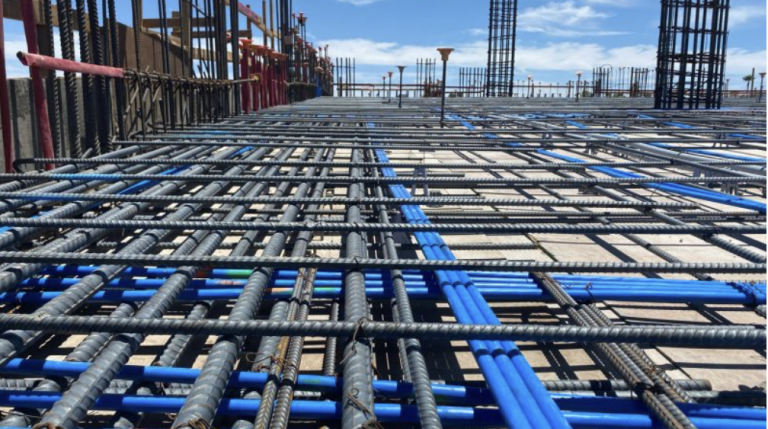
Constructure Inc. executes reinforcing steel placement and post-tensioned concrete construction in accordance with Division 03 structural concrete requirements, engineered construction documents, and all applicable California Building Code (CBC), ACI, PTI, and governing regulatory standards. These reinforcement systems are integral to achieving the tensile strength, crack control, load distribution, and long-term durability required for cast-in-place concrete foundations, slabs, beams, columns, shear walls, and structural core assemblies.
Conventional reinforcing steel is furnished, fabricated, and installed in strict conformance with approved shop drawings, bar schedules, and specified material standards. Placement tolerances, concrete cover, splice locations, and mechanical connections are verified through continuous field supervision and special inspection procedures to ensure structural continuity and compliance with engineered design intent. Reinforcing systems are coordinated with embedments, sleeves, and structural interfaces to maintain dimensional accuracy and prevent field conflicts that could impact structural performance or schedule.
Post-tension reinforcement systems are installed using high-strength steel tendons, anchorage assemblies, and stressing equipment compliant with Post-Tensioning Institute (PTI) recommendations and project-specific structural specifications. Tendons are tensioned in controlled sequencing after concrete has achieved the required compressive strength, introducing calculated compressive forces within the concrete section to enhance span capacity, reduce deflection, limit cracking, and optimize slab thickness and structural efficiency. Stressing operations, elongation measurements, and final lock-off forces are documented and verified through qualified field personnel and special inspection agencies in accordance with California regulatory requirements.
Constructure Inc. integrates reinforcement and post-tension installation within a comprehensive Quality Control and Quality Assurance framework consistent with Division 03 execution provisions. This framework includes:
Material certification and traceability for reinforcing steel and post-tension components
Pre-placement inspection of bar placement, supports, spacing, and clear cover
Verification of tendon profiles, anchor locations, and stressing sequences
Concrete strength testing prior to stressing operations
Continuous coordination with the Structural Engineer of Record and special inspectors
Documented inspection, testing, and compliance reporting for lender and regulatory review
All reinforcement activities are performed under disciplined field supervision and in alignment with Constructure Inc.’s California safety and regulatory compliance programs, incorporating Cal/OSHA and Federal OSHA requirements governing concrete construction, stressing operations, and structural work. These controls are implemented to mitigate construction risk, protect structural integrity, and preserve lender collateral throughout the construction lifecycle.
Through adherence to Division 03 standards, engineered design criteria, and rigorous inspection protocols, Constructure Inc. delivers reinforced and post-tensioned concrete systems that meet or exceed California code requirements, support predictable project completion, and ensure long-term structural reliability for owners, investors, and lending institutions.
Pumping Truck Mount
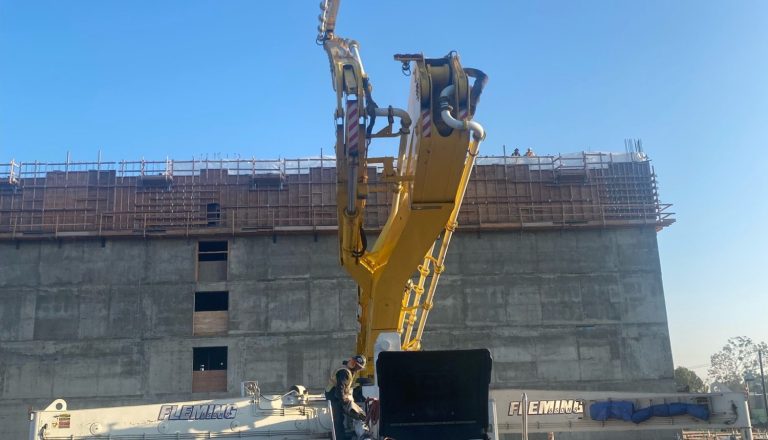
Constructure Inc. performs cast-in-place concrete placement utilizing truck-mounted boom pump systems in accordance with Division 03 execution requirements, engineered placement procedures, and all applicable California Building Code (CBC), ACI, and Cal/OSHA and Federal OSHA safety standards. Boom pump equipment constitutes a critical component of controlled concrete delivery for foundations, elevated decks, vertical elements, and structural core assemblies, particularly within mid- and high-rise construction environments where access, elevation, and placement precision are essential to structural quality and schedule performance.
A boom pump consists of a hydraulically operated, articulated placing boom mounted to a concrete pump truck capable of extending to elevated or restricted work zones. This configuration enables continuous, controlled delivery of concrete directly to the point of placement, reducing reliance on manual handling methods and minimizing the risk of segregation, cold joints, spillage, or material loss. The use of boom pumping supports uniform placement rates, improved consolidation, and consistent finishing conditions necessary to achieve specified strength, durability, and dimensional tolerances in accordance with project specifications and ACI 301/318 performance criteria.
Constructure Inc. integrates boom pump operations within its comprehensive Quality Control and Safety Management framework, including:
Verification of pump capacity, reach, and configuration relative to engineered placement plans
Pre-placement coordination of pour sequences, access zones, and crane or formwork interfaces
Inspection of delivery systems, hose connections, and end-placement controls
Monitoring of concrete slump, temperature, and placement continuity to prevent cold joints
Continuous communication among pump operators, placement crews, field supervision, and testing agencies
Compliance with Cal/OSHA requirements governing concrete pumping, equipment stability, fall protection, and exclusion zones
Boom pump utilization enhances productivity, improves worker safety by reducing manual transport and exposure, and supports predictable pour sequencing critical to structural integrity and schedule adherence. These operational controls directly mitigate construction risk and contribute to the protection of project collateral for owners and lending institutions.
Through disciplined planning, qualified operators, and adherence to Division 03 placement standards, Constructure Inc. delivers efficient, safe, and code-compliant concrete placement operations that support reliable project execution and long-term structural performance across California construction projects.
Pumping Placing Booms
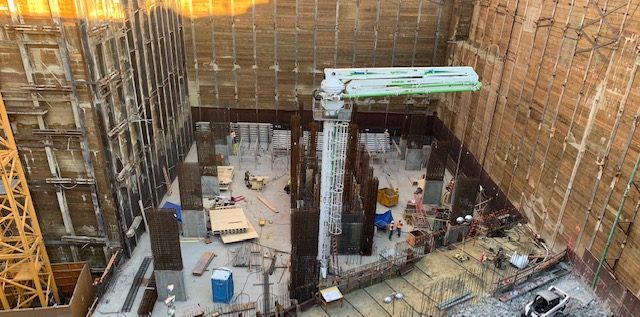
Constructure Inc. incorporates concrete placing boom systems as a controlled delivery method for cast-in-place structural concrete in accordance with Division 03 execution requirements, engineered placement procedures, and all applicable California Building Code (CBC), ACI, and Cal/OSHA and Federal OSHA safety regulations. Placing booms are utilized to support efficient, continuous, and precisely directed concrete placement for foundations, elevated slabs, vertical structural elements, and reinforced concrete core assemblies, particularly within mid- and high-rise construction environments where access limitations and elevation changes require engineered delivery solutions.
Placing boom equipment—whether truck-mounted, trailer-mounted, or tower-supported—provides articulated reach and controlled discharge directly at the point of placement. This method reduces reliance on manual transport, minimizes the potential for segregation, cold joints, or material loss, and supports uniform placement rates necessary to achieve specified structural strength, durability, and dimensional tolerances consistent with ACI 301 and ACI 318 performance criteria. Precision placement also improves consolidation and finishing conditions, contributing to long-term structural integrity and service life.
Constructure Inc. integrates placing boom utilization within its comprehensive Quality Control, Quality Assurance, and Site Safety framework, including:
Engineering review of boom reach, support configuration, and load distribution relative to structural formwork and deck capacity
Pre-placement coordination of pour sequencing, access control, and interaction with cranes, pumps, and formwork systems
Inspection of boom components, delivery lines, and discharge controls prior to placement operations
Continuous monitoring of concrete properties, placement continuity, and consolidation to prevent cold joints or structural deficiencies
Qualified operator certification and supervision in accordance with Cal/OSHA equipment operation and fall-protection requirements
Documentation of placement activities, inspection records, and testing results for regulatory and lender review
The controlled use of placing boom systems enhances construction productivity, improves worker safety by limiting manual handling and congestion, and supports predictable pour sequencing essential to structural performance and schedule reliability. These operational controls materially reduce construction risk and contribute to the protection of project collateral throughout the construction lifecycle.
Through disciplined planning, qualified personnel, and strict adherence to Division 03 placement standards, Constructure Inc. delivers safe, efficient, and code-compliant concrete placement operations that support dependable project completion and long-term asset durability for owners, investors, and lending institutions.
Place and Finish
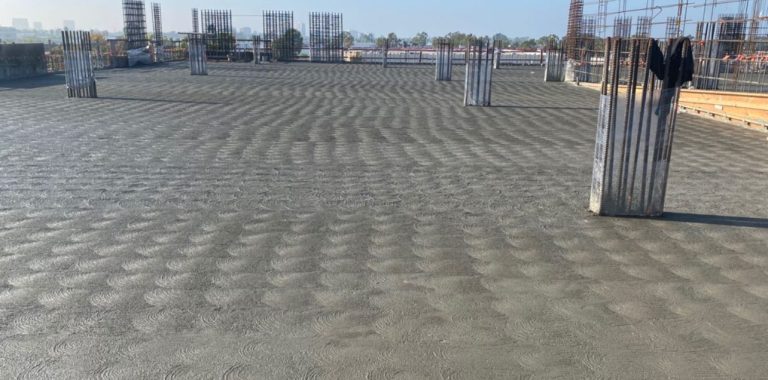
Constructure Inc. performs concrete placement and finishing operations in strict accordance with Division 03 execution requirements, engineered construction documents, and all applicable California Building Code (CBC), ACI, and Cal/OSHA and Federal OSHA regulatory standards. These controlled finishing procedures govern the placement, consolidation, leveling, and final surface treatment of cast-in-place concrete elements, ensuring the strength, durability, dimensional tolerance, and surface performance required for structural and architectural applications.
Following discharge from approved delivery systems, concrete is systematically placed to achieve uniform distribution within forms and across slab areas while preventing segregation, displacement of reinforcement, or interruption of placement continuity. Mechanical vibration and consolidation are then applied using properly sized internal or external vibrators to eliminate entrapped air, promote full encapsulation of reinforcing steel and embedments, and achieve the density necessary to meet specified compressive strength and durability requirements consistent with ACI 301 and ACI 318 performance criteria.
After consolidation, concrete surfaces are screeded and leveled using straightedges or mechanical screeding systems to establish the required plane, elevation, and slab profile. This operation is coordinated with elevation controls and survey benchmarks to maintain compliance with project tolerances and drainage requirements. Subsequent surface finishing is executed in controlled stages aligned with concrete set characteristics and environmental conditions. Large slab areas are finished using ride-on power trowels to achieve uniform density, smoothness, and wear resistance, while hand trowelingis performed at edges, penetrations, and confined locations to ensure continuity of finish and dimensional accuracy.
Constructure Inc. integrates concrete finishing within its comprehensive Quality Control, Quality Assurance, and Safety Management framework, including:
Verification of concrete mix properties, placement timing, and environmental conditions prior to finishing
Continuous monitoring of consolidation effectiveness to prevent honeycombing, voids, or surface defects
Elevation and flatness control to meet specified FF/FL tolerances and drainage performance requirements
Sequenced finishing operations coordinated with curing initiation to preserve surface integrity
Implementation of curing methods that support strength development, shrinkage control, and long-term durability
Compliance with Cal/OSHA requirements governing concrete placement, finishing equipment operation, ergonomics, and site safety controls
Documentation of inspection, testing, and finishing compliance for regulatory and lender review
Proper execution of placement, consolidation, screeding, and finishing operations is essential to achieving structurally sound, dimensionally accurate, and serviceable concrete surfaces. These disciplined procedures directly reduce the risk of premature deterioration, surface failure, or structural deficiency, thereby protecting project performance and lender collateral throughout the construction lifecycle.
Through experienced field supervision, qualified craft labor, and strict adherence to Division 03 standards and engineered specifications, Constructure Inc. delivers concrete finishes that meet or exceed California regulatory requirements and industry performance expectations, ensuring reliable project completion and long-term asset durability for owners, investors, and lending institutions.
Shotcrete Walls
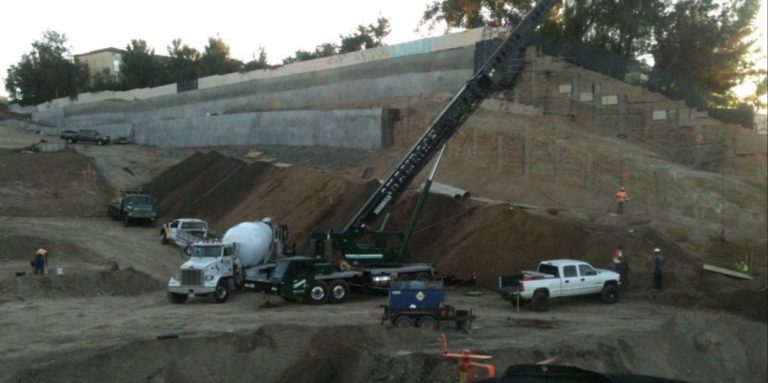
Constructure Inc. performs shotcrete wall construction in accordance with Division 03 structural concrete requirements, engineered design documents, and all applicable California Building Code (CBC), ACI 318, ACI 301, and ACI 506 standards governing pneumatically placed concrete, together with Cal/OSHA and Federal OSHA safety regulations. Shotcrete applications are utilized where structural geometry, site access limitations, soil retention conditions, or architectural configuration necessitate controlled concrete placement with reduced conventional formwork and enhanced bond performance.
Shotcrete placement involves the high-velocity projection of a cementitious concrete mixture through pneumatic delivery equipment onto prepared substrates and reinforcing assemblies. This process produces dense, well-consolidated concrete with strong adhesion to reinforcement and receiving surfaces, enabling the construction of structurally efficient walls, retaining systems, tunnel linings, pools, and other vertical or irregular concrete elements. Proper nozzle technique, material proportioning, and placement sequencing are critical to achieving uniform density, encapsulation of reinforcing steel, and compliance with specified compressive strength and durability requirements.
Constructure Inc. integrates shotcrete operations within a comprehensive Quality Control, Quality Assurance, and Safety Management framework consistent with Division 03 execution provisions, including:
Verification of mix design, material delivery, and pneumatic equipment calibration prior to placement
Inspection of substrate preparation, reinforcement configuration, and embedment installation
Qualification of nozzle operators and supervision consistent with ACI 506 certification practices
Continuous monitoring of placement thickness, rebound control, and consolidation quality
Field sampling, compressive strength testing, and core verification as required by project specifications and California special inspection requirements
Implementation of curing procedures and environmental controls to ensure strength development and long-term durability
Compliance with Cal/OSHA regulations governing compressed-air equipment, fall protection, confined work areas, and concrete placement safety
The controlled execution of shotcrete wall systems provides structural efficiency, reduced formwork dependency, and adaptability in constrained or complex construction environments. These characteristics enhance schedule reliability, improve worker safety, and reduce construction risk—factors essential to protecting project performance and lender collateral throughout the construction lifecycle.
Through adherence to Division 03 standards, certified placement practices, and disciplined inspection protocols, Constructure Inc. delivers shotcrete wall assemblies that meet or exceed California regulatory requirements and industry performance expectations, ensuring dependable structural behavior and long-term asset durability for owners, investors, and lending institutions.
Masonry Walls
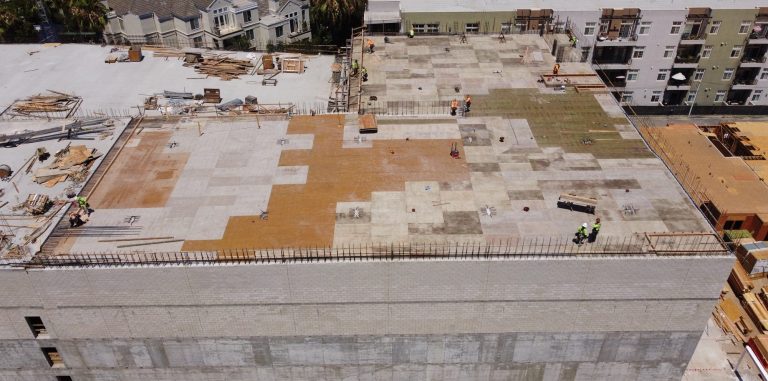
Constructure Inc. performs masonry wall construction in accordance with Division 04 masonry requirements, engineered construction documents, and all applicable California Building Code (CBC), TMS 402/602, and governing regulatory standards, together with Cal/OSHA and Federal OSHA safety requirements. Masonry wall systems are incorporated where structural support, enclosure performance, fire resistance, and long-term durability are required for residential, commercial, and mixed-use construction across California project environments.
Masonry walls are constructed using approved units—including clay brick, natural stone, and concrete masonry units (CMU)—installed with specified mortar systems, reinforcement, and anchorage components to achieve required structural capacity and service performance. Layout, coursing, alignment, and bond patterns are executed in strict conformance with approved shop drawings and project specifications to ensure dimensional accuracy, load transfer continuity, and architectural consistency. Where structural masonry is required, reinforcing steel, grout placement, and connection detailing are installed to provide resistance to gravity, wind, and seismic forces consistent with California seismic design criteria.
Constructure Inc. integrates masonry construction within a comprehensive Quality Control, Quality Assurance, and Safety Management framework, including:
Verification of masonry unit compliance, mortar proportions, grout materials, and reinforcement certifications
Inspection of substrate preparation, layout control lines, and anchorage interfaces with structural framing
Monitoring of reinforcement placement, grout consolidation, lift heights, and curing conditions
Dimensional tolerance verification for plumbness, levelness, and alignment in accordance with TMS and project specification standards
Coordination of flashing, moisture barriers, and weep systems to maintain enclosure performance and durability
Compliance with Cal/OSHA safety requirements governing scaffolding, material handling, fall protection, and masonry operations
Documentation of inspection, testing, and installation compliance for regulatory authorities and lender review
Properly executed masonry wall systems provide fire resistance, impact durability, weather protection, and long-term structural reliability, contributing to resilient building envelopes and dependable service life. These characteristics materially reduce lifecycle risk and support the preservation of project value and lender collateral.
Through disciplined supervision, qualified craft labor, and strict adherence to Division 04 standards and California regulatory requirements, Constructure Inc. delivers masonry wall assemblies that meet or exceed structural, architectural, and performance expectations—supporting reliable project completion and long-term asset integrity for owners, investors, and lending institutions.
Cranes - Tower & Mobile
Constructure Inc. integrates tower crane and mobile crane operations into its structural concrete construction activities in accordance with project-specific engineered lift plans, California Building Code (CBC) requirements, applicable Cal/OSHA and Federal OSHA regulations, and recognized industry safety standards. Crane utilization is fundamental to the safe, efficient, and controlled handling of concrete materials, reinforcing assemblies, formwork systems, and embedded structural components across low-, mid-, and high-rise construction environments throughout California.
Tower cranes are deployed on projects requiring sustained vertical construction, high lifting capacities, and broad site coverage. Their fixed foundations, engineered tie-in systems, and rotating jib configurations enable precise placement of concrete buckets, formwork panels, reinforcing steel, and prefabricated structural elements at elevation. Tower crane operations are coordinated with structural sequencing, concrete placement schedules, and site logistics to maintain continuous workflow, minimize congestion, and support predictable construction progress in dense or urban conditions.
Mobile cranes provide operational flexibility for foundation work, podium construction, structural transitions, and projects where permanent crane installation is not required. Their mobility allows rapid repositioning, adaptable lift radii, and efficient support of multiple work zones, particularly in constrained sites or phased construction environments. Mobile crane deployment is governed by engineered lift planning, ground-bearing verification, outrigger stabilization, and load-path control to ensure safe and compliant operation.
Constructure Inc. incorporates crane operations within its comprehensive Quality Control, Quality Assurance, and Site Safety Management framework, including:
Preparation and engineering review of lift plans, load charts, and crane configurations
Verification of crane assembly, inspection certification, and operator qualifications
Coordination of crane operations with concrete placement sequencing, formwork cycling, and reinforcement installation
Establishment of controlled access zones, swing radii protection, and fall-protection interfaces
Continuous communication among crane operators, signal persons, field supervision, and safety personnel
Compliance with Cal/OSHA Title 8 requirements governing hoisting, rigging, signaling, and critical lift procedures
Documentation of inspections, lift activities, and safety compliance for regulatory authorities and lender review
The disciplined use of tower and mobile crane systems enhances construction efficiency, worker safety, schedule reliability, and material handling precision, all of which are critical to maintaining structural quality and protecting project collateral. Proper crane coordination reduces the risk of placement delays, material damage, or safety incidents that could adversely impact project completion or financial performance.
Through engineered planning, qualified personnel, and strict adherence to California regulatory standards, Constructure Inc. delivers crane-supported construction operations that meet or exceed industry safety and performance expectations—supporting dependable project execution and long-term asset value for owners, investors, and lending institutions.
Construction Management
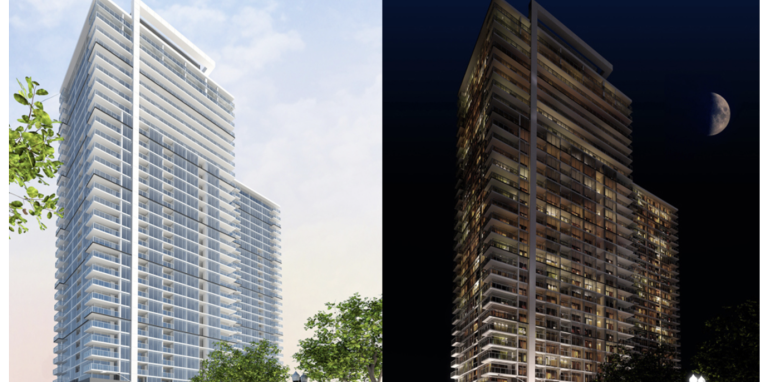
Construction management is a core operational discipline within Constructure Inc., encompassing the comprehensive planning, coordination, execution, and control of construction activities from preconstruction through final completion and closeout. All management functions are performed in accordance with project-specific contract requirements, the California Building Code (CBC), applicable regulatory standards, and Constructure Inc.’s internal quality, safety, and risk-management protocols to ensure predictable project delivery and protection of owner and lender interests.
Constructure Inc.’s construction management approach integrates budget control, schedule management, procurement coordination, and resource allocation within a structured project controls framework designed to maintain alignment with approved financial and performance objectives. Detailed cost monitoring, schedule sequencing, subcontractor coordination, and materials logistics are continuously evaluated to mitigate delay risk, control expenditures, and maintain construction progress consistent with contractual milestones and lender underwriting assumptions.
Effective project execution is supported by experienced project managers, field supervision, and administrative personnel who maintain clear communication among owners, architects, engineers, consultants, subcontractors, and regulatory authorities. This coordinated communication structure ensures timely decision-making, accurate documentation, rapid issue resolution, and full transparency throughout the construction lifecycle. Constructure Inc. emphasizes disciplined documentation practices—including submittal control, request-for-information (RFI) management, change management, inspection tracking, and progress reporting—to preserve contractual compliance and provide auditable records for lender and stakeholder review.
Risk mitigation is embedded within all construction management activities through:
Proactive constructability review and preconstruction planning
Continuous cost forecasting and variance analysis
Schedule monitoring with recovery planning where required
Quality control and special inspection coordination consistent with governing codes
Enforcement of site safety programs in compliance with Cal/OSHA and Federal OSHA
Structured change management to control scope, cost, and schedule impacts
Regular reporting to ownership and lending institutions regarding progress, risk status, and financial performance
Through disciplined management practices, collaborative stakeholder coordination, and adherence to California regulatory and contractual requirements, Constructure Inc. delivers construction projects that meet time, cost, quality, and safety objectives while safeguarding long-term asset value. These controls directly support lender confidence, project stability, and successful project completion across Southern California construction environments.
Window Wall Facade
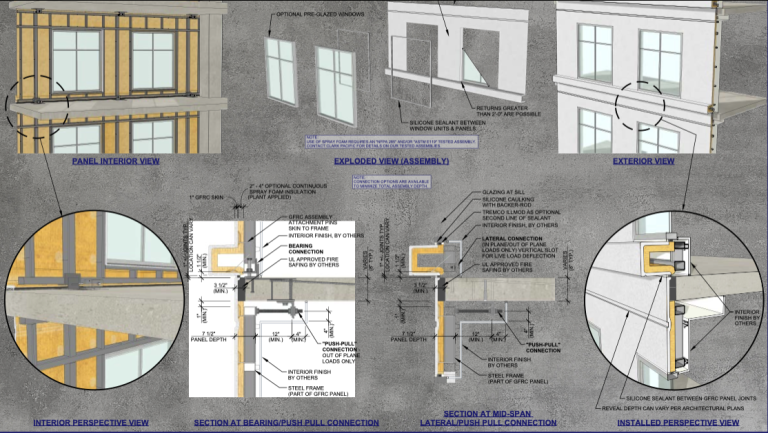
Constructure Inc. coordinates the installation and integration of window wall systems within cast-in-place concrete structures in accordance with Division 08 requirements, engineered construction documents, the California Building Code (CBC), applicable energy performance regulations, and governing industry standards. Window wall assemblies are incorporated to provide architectural transparency, controlled daylighting, weather protection, and thermal performance while maintaining compatibility with the structural concrete frame and overall building envelope system.
Window wall construction consists of factory-fabricated glazing assemblies anchored to slab edges, columns, or embedded structural connection points within the concrete frame. The structural concrete system provides the primary gravity and lateral support, enabling expansive glazed openings without compromising building stability. Proper interface detailing between concrete substrates and glazing systems is critical to accommodate structural tolerances, differential movement, seismic drift, and thermal expansion consistent with California performance requirements.
Constructure Inc. integrates window wall coordination within its comprehensive Quality Control, Quality Assurance, and Building Envelope Risk-Management framework, including:
Verification of embed locations, slab edge tolerances, and structural attachment conditions prior to glazing installation
Coordination of shop drawings, engineering calculations, and delegated design elements with the Structural Engineer of Record and façade consultants
Inspection of anchorage systems, sealants, gaskets, flashing, and waterproofing interfaces to ensure continuous air and moisture barriers
Compliance with California energy codes governing glazing performance, thermal transmittance, and solar heat gain characteristics
Sequenced installation aligned with concrete curing, structural loading progression, and exterior access systems
Field testing and inspection, where specified, for water penetration, air infiltration, and system performance
Documentation of installation quality and compliance for regulatory authorities, ownership, and lender review
Properly executed window wall systems enhance natural light, occupant comfort, energy efficiency, and architectural value while maintaining the integrity of the structural concrete frame and building envelope. Rigorous coordination and inspection are essential to prevent water intrusion, thermal inefficiency, or long-term façade deterioration—risks that could adversely affect building performance and lender collateral.
Through disciplined coordination, qualified installation oversight, and adherence to Division 08 standards and California regulatory requirements, Constructure Inc. delivers window wall assemblies that meet or exceed structural, environmental, and durability expectations, supporting reliable project completion and long-term asset performance for owners, investors, and lending institutions.

BIM
Constructure Inc. implements Building Information Modeling (BIM) as an integrated digital coordination and project-control platform supporting construction planning, design validation, cost management, scheduling, and field execution across California construction projects. BIM processes are administered in alignment with project contractual requirements, the California Building Code (CBC), applicable industry standards, and Constructure Inc.’s internal quality, safety, and risk-management procedures to enhance project predictability and protect owner and lender interests.
BIM provides a coordinated digital representation of the physical and functional characteristics of the building, integrating architectural, structural, mechanical, electrical, plumbing, and specialty systems within a unified model environment. This coordinated modeling framework enables clash detection, constructability analysis, sequencing validation, and quantity verification, reducing field conflicts, rework exposure, and schedule disruption. Model-based coordination also supports accurate procurement planning, material tracking, and phased construction logistics consistent with approved project schedules and financial controls.
Constructure Inc. incorporates BIM within its comprehensive Project Controls and Quality Assurance framework, including:
Multidisciplinary model coordination and federated model management
Clash detection resolution and constructability review prior to field installation
Model-based quantity takeoffs supporting budgeting, cost forecasting, and change control
Integration of 4D scheduling and 5D cost modeling to evaluate sequencing, logistics, and financial impacts
Digital coordination of embeds, sleeves, and structural interfaces within cast-in-place concrete systems
Field utilization of coordinated drawings and model data to improve installation accuracy and reduce rework
Documentation of coordination outcomes and revision control for stakeholder and lender transparency
BIM implementation further supports sustainability and lifecycle performance by enabling energy analysis, material optimization, and operational data integration consistent with California environmental and energy performance requirements. These capabilities contribute to reduced waste, improved building efficiency, and long-term asset resilience.
Through disciplined digital coordination, experienced project management oversight, and adherence to Division 01 project-control standards, Constructure Inc. leverages BIM to improve schedule certainty, cost reliability, construction quality, and risk mitigation. These outcomes materially enhance project stability and safeguard lender collateral, supporting dependable delivery and long-term value across Constructure Inc.’s California construction portfolio.

Procore
Constructure Inc. utilizes Procore as its centralized construction management and project-controls platform to support planning, coordination, execution, documentation, and financial oversight across California construction projects. Platform implementation is aligned with project contractual requirements, the California Building Code (CBC), applicable regulatory standards, and Constructure Inc.’s internal quality, safety, and risk-management procedures to promote transparency, accountability, and predictable project delivery for owners and lending institutions.
The Procore environment provides an integrated digital workspace that connects project management staff, field supervision, subcontractors, design professionals, and stakeholders through controlled access to real-time project information. Core functionality supports budget administration, schedule coordination, document control, submittal tracking, request-for-information (RFI) management, change management, inspection documentation, and progress reporting, ensuring that all project data is maintained within a single auditable system of record.
Constructure Inc. incorporates Procore within its comprehensive Project Controls, Quality Assurance, and Financial Governance framework, including:
Centralized contract documentation, drawing management, and revision control
Real-time cost tracking, commitment management, and budget variance monitoring
Structured change event and change order workflows with approval traceability
Submittal and RFI lifecycle management to maintain design and construction alignment
Field inspection reporting, punch list control, and closeout documentation
Daily reporting, photographic documentation, and production tracking from field operations
Secure data access and reporting transparency for ownership and lender stakeholders
Digital workflow integration through Procore enhances communication efficiency, documentation accuracy, and decision-making speed, materially reducing the risk of cost overruns, schedule delays, or unmanaged scope changes. The platform’s auditability and reporting capability further support lender oversight by providing clear visibility into project status, financial performance, and compliance throughout the construction lifecycle.
Through disciplined implementation of Procore within its Division 01 project-controls structure, Constructure Inc. strengthens schedule certainty, financial governance, construction quality, and risk mitigation, directly supporting dependable project completion and long-term asset protection across its California construction portfolio.